If the dishwasher stopped draining right after a new disposal went in, the first thing to check is the knockout plug in the disposal's dishwasher inlet. Many new disposals ship with that port blocked; check yours. If the installer connected the hose without removing the plug, the pump is pushing water into a dead end. The second suspect is a kinked or low drain hose. A 20-minute check at the inlet tells you which one you have.
Safety first
This is a moderate-risk job because the work is under a wet sink with two appliances that hold water and line voltage.
- Turn off the dishwasher at the breaker before you disconnect its drain hose. The pump circuit can still be live, and the hose holds water.
- Turn off and unplug the disposal, or switch off its breaker, before you work near the inlet. Never put your hand into the grinding chamber.
- Expect water. Put a shallow bucket and towels under the connection. Water will come out even after the cycle ends.
- If water is at an outlet, a cord, or the breaker panel, do not touch the panel or the cord. Call an electrician or the utility from a dry location.
- Do not use drain cleaner in the dishwasher. It can damage the pump and does not clear a knockout plug or a kinked hose.
- If the hose is hard-piped, glued, or behind a cabinet you cannot reach, stop. Reconnecting it is a plumbing job.
Why a new disposal changes the drain path
A dishwasher does not drain by gravity. At the end of a cycle, a pump pushes the water out through a corrugated hose. That hose ends at one of two places: the dishwasher inlet on the garbage disposal, or a sink drain tailpiece. Some run through an air gap. Look at where yours ends before you loosen anything; if it ends at a tailpiece or separate drain, this test does not apply.
Many new disposals come with the dishwasher inlet blocked by a knockout plug. When the hose connects to the disposal, the plug has to be knocked out and removed before the drain hose is connected. If it is still there, the hose is capped at the far end, so the pump has nowhere to push the water.
A kinked or low hose looks the same from the kitchen floor; the test below finds where the water stops.
The 20-minute knockout-plug test
Whirlpool publishes this check for a newly installed dishwasher that will not drain. Set aside about 20 minutes; if the plug has to come out, that is a separate job. You need a shallow bucket, towels, a flashlight, a screwdriver or nut driver for the hose clamp, needle-nose pliers, and a pencil.
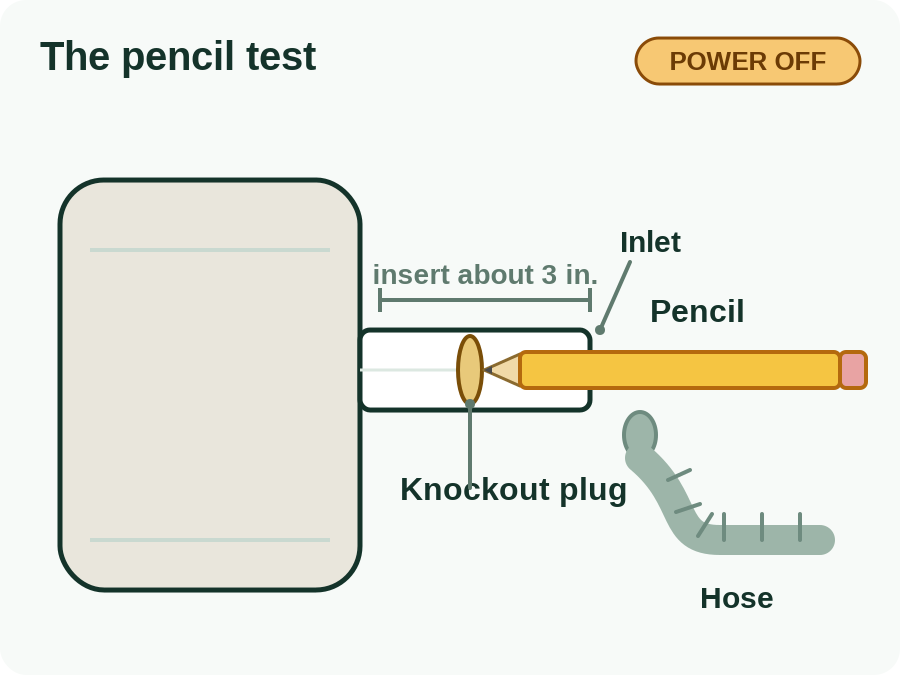
- Cut the power. Switch off the dishwasher breaker. Unplug the disposal or switch off its breaker.
- Set up for water. Put the bucket and towel under the disposal inlet. The hose will be full.
- Loosen the clamp and pull the hose. Use the screwdriver or nut driver. Twist the hose off the inlet rather than yanking it.
- Test the inlet with a pencil. The knockout plug sits recessed inside the inlet and may not be visible from the side. Insert a pencil. Whirlpool's check: if it goes in about 3 inches, the inlet is clear. If it stops short, the plug is still in place. A plug pushed into the chamber also leaves the inlet clear, so if you cannot confirm the plug came out in one piece, do not run the disposal.
- If the plug is there, stop. InSinkErator's installation instructions say to lay the disposal on its side and tap the plug out with a screwdriver and hammer. On an installed unit, that means disconnecting the drain, the mounting assembly, and the electrical connections. That is a plumbing and electrical job, not a 20-minute under-sink check. Do not hammer the inlet while the disposal is mounted, and do not reach into the chamber. Reconnect and clamp the hose before you stop or use the sink. Call a licensed plumber or the installer.
- If the plug is out, follow the water. Check the hose for kinks, the high loop, the air gap, the disposal inlet, and the filter. Reconnect the hose, restore power, and run a drain cycle.
What the test tells you
- The pencil stops short, or you can see the plug. The knockout plug is still in the inlet. Removal is a plumber or installer job; do not hammer it out on a mounted unit.
- The pencil goes in about 3 inches. The inlet is clear. The problem is downstream: hose, high loop, air gap, disposal inlet, or filter. If the plug was pushed into the chamber rather than removed, do not run the disposal; call a plumber.
- The hose is kinked, crushed, or runs flat under the sink. Reroute it into a high loop. GE says the loop must be attached under the counter at the height in the dishwasher's installation instructions, and local code may require an air gap. Replace an old, stiff hose if it will not hold shape.
- The hose is clear but the disposal inlet is packed with food. Reconnect and clamp the hose first, then run the disposal with cold water. Do not run it with the inlet open. If it hums instead of turning, stop and use the disposal guide.
- Water comes out of the air gap on the counter, or the air gap is full of debris. Clean the air gap cap and passage. If it still backs up, the clog is downstream.
- The filter or sump is full of food. Clean the filter and the sump area. This is less likely to be caused by the disposal swap, but it is quick to rule out.
- Water is at a cord, outlet, or the panel. Do not touch the panel or the cord. Call an electrician or the utility from a dry location.
The likely causes, in order
1. The knockout plug was never removed
This is the classic post-install failure. It is why Whirlpool puts it first and GE lists it as a post-install check. The plug is recessed, so a quick look can miss it; the pencil test is the reliable check. InSinkErator's installation procedure requires disconnecting the disposal; do not attempt the mounted shortcut.
2. The drain hose is kinked or missing its high loop
A hose that is pinched behind the dishwasher or under the sink can stop flow even with a clear inlet. So can a hose that runs flat or slopes down before it reaches the disposal. Whirlpool calls for a high loop or an air gap, as local codes require. GE says the loop must be attached to the underside of the counter at the height in the installation instructions. Check the whole run, and confirm the hose is on the correct inlet and clamped.
3. The disposal inlet or the disposal itself is clogged
Food can pack into the inlet or the grinding chamber. A slow sink points to a shared drain clog; it does not rule out a separate hose or filter problem. Reconnect and clamp the hose, then run the disposal with cold water. Do not run it with the inlet open. If it hums and will not turn, stop and use the disposal guide.
4. The air gap is blocked
An air gap on the counter can collect debris. GE says to remove the cap and clean out the build-up. If water stands in it or spills onto the counter, clean it before assuming the pump has failed.
When to stop and call a pro
- Water is at an electrical outlet, a cord, or the breaker panel.
- The breaker trips when the dishwasher starts.
- The sink gurgles, backs up, or smells like sewage.
- The drain hose is glued, hard-piped, or behind a cabinet you cannot access.
- The knockout plug is still in the inlet. That is a plumber or installer job.
- The disposal hums or will not turn when you test it.
- If it still holds water after the hose is clear and reconnected, and the filter is clean, the pump or controls need an appliance tech.
A knockout plug and a kinked hose are reasonable homeowner checks. Removing the plug, pump replacement, hardwired electrical work, and a glued drain line are not.
Related guides
If the disposal itself hums instead of turning, that is a separate problem. More symptom-first guides are on the FixThis learn hub.
Written from manufacturer documentation by the FixThis editorial team. FixThis is not a licensed plumber or electrician; this is general guidance, not an inspection. Procedures vary by model, so check your disposal and dishwasher manuals.
What's your specific symptom?
Describe what you're seeing or upload a photo.
You are texting the AI assistant for FixThis. It is not a licensed professional, and it gives general guidance — not professional inspection or diagnosis. If you smell gas, see active flooding, sparks, or fire, or believe there is immediate danger to people or property, leave the area and call 911 or your utility.
Sources
- https://producthelp.whirlpool.com/Dishwashers/Dishwasher/Cycle_Concerns/Not_Draining%2F%2FWater_Remains/Not_Draining_-_Newly_Installed_-_Dishwasher
- https://producthelp.whirlpool.com/Dishwashers/Product_Info/Dishwasher_Product_Assistance/Newly_Installed_Dishwasher_Not_Draining
- https://www.insinkerator.com/en-us/support/installing-a-replacement-garbage-disposal
- https://products.geappliances.com/appliance/gea-support-search-content?contentId=16240