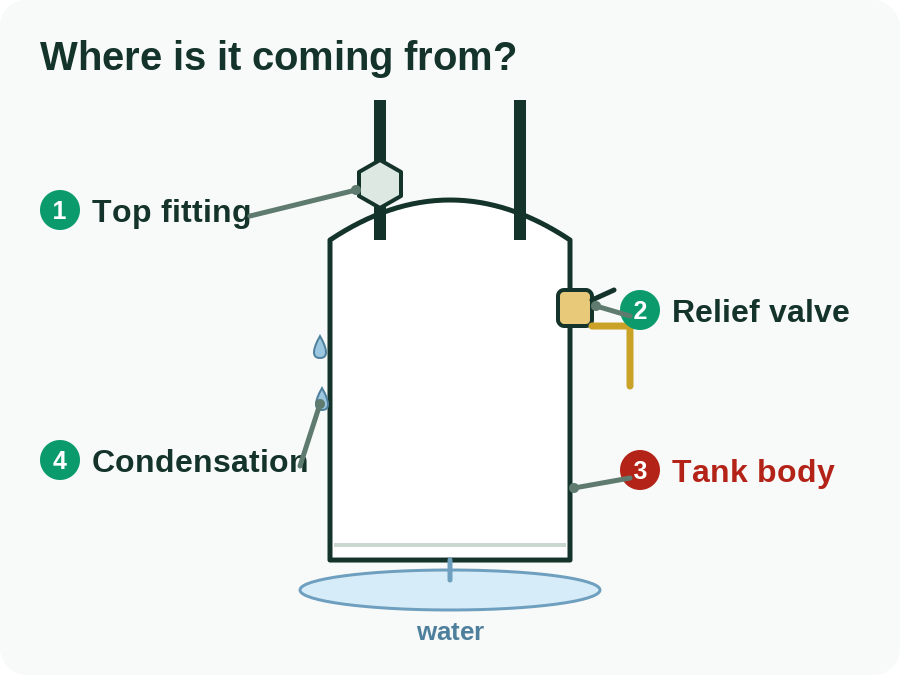
A puddle under a water heater can come from the tank itself, a loose fitting, the relief valve, or condensation on a cold tank. Where the water comes back tells you which one you are dealing with.
First, find where it is coming from
Wipe the area dry, then watch where the water reappears. Water at the top of the tank or on the pipes is usually a fitting. Water at the base of the steel tank itself is the tank.
If it is the tank, stop
A leak through the steel body of the tank cannot be repaired, and it can get worse quickly. Before anything else:
- Gas: turn the gas control knob to OFF.
- Electric: switch off the breaker that feeds the heater.
- Shut the cold-water supply valve on the pipe above the heater.
What you can check yourself
- A loose fitting on the inlet or outlet pipe: a quarter turn on the nut is enough. Do not force it.
- The relief valve: if it is dripping, the valve or the water pressure is the problem, not the tank.
- Condensation: a cold tank on a humid day can sweat. Dry it and check again in an hour.
When to call a pro
- Water is coming out of the tank body, the top of the tank, or the pan keeps filling.
- You smell gas, or the breaker trips when the heater runs.
- The heater is more than ten years old — a leaking tank usually means replacement, not repair.
What's your specific symptom?
Describe what you're seeing or upload a photo.
You are texting the AI assistant for FixThis. It is not a licensed professional, and it gives general guidance — not professional inspection or diagnosis. If you smell gas, see active flooding, sparks, or fire, or believe there is immediate danger to people or property, leave the area and call 911 or your utility.